A Slower Way to Celebrate
So many Fourth of July celebrations today feel rushed, loud, and full of disposable decorations. But what if we returned to something quieter? Something more intentional? Something that felt closer to how early Americans might have gathered — not perfectly historically accurate, but inspired.
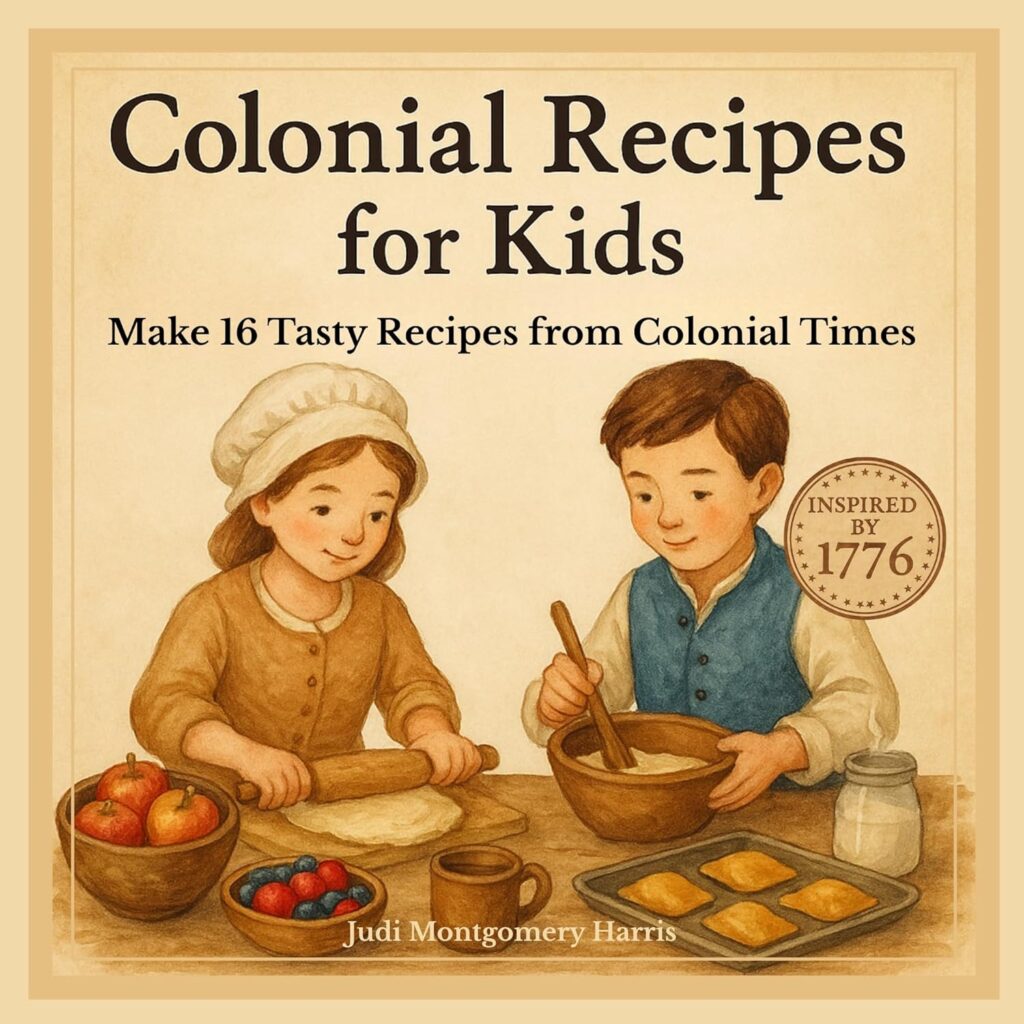
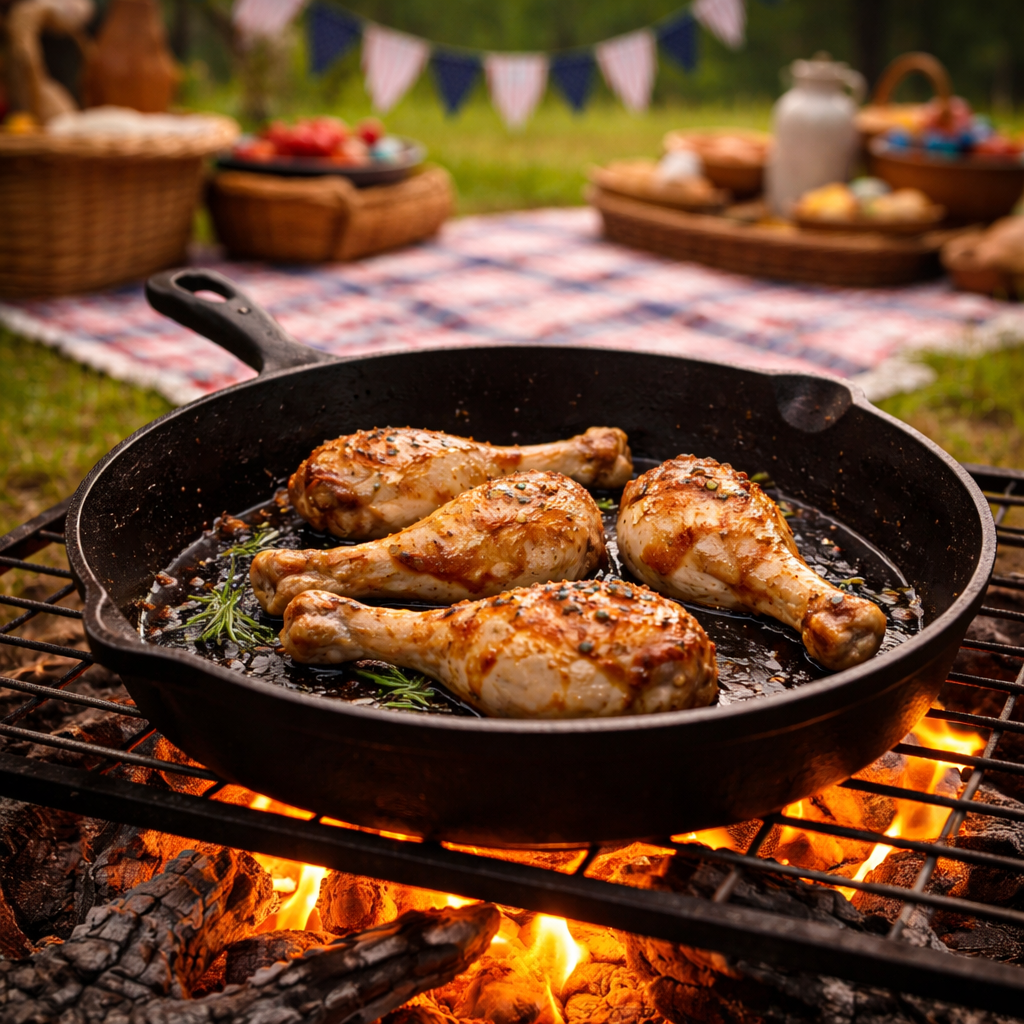
When I think back to that summer, I don’t remember elaborate spreads or complicated recipes. I remember simple food shared outside. A basket of bread or fresh rolls. Chicken legs wrapped in paper and eaten with your hands. A wedge of cheese, sliced apples, maybe a bowl of berries. Lemonade poured into mason jars. Colonial meals weren’t about impressing anyone — they were about gathering. For a 1776-style picnic today, I love keeping the food rustic and uncomplicated. Fresh fruit, homemade biscuits or hand pies, cold drinks in pitchers, and food that invites you to sit longer and talk. Keeping it colonial and for cooking over coals, a cast iron skillet is my favorite. It’s sturdy, heats evenly, and works beautifully for apple cakes, skillet breads, and sautés.
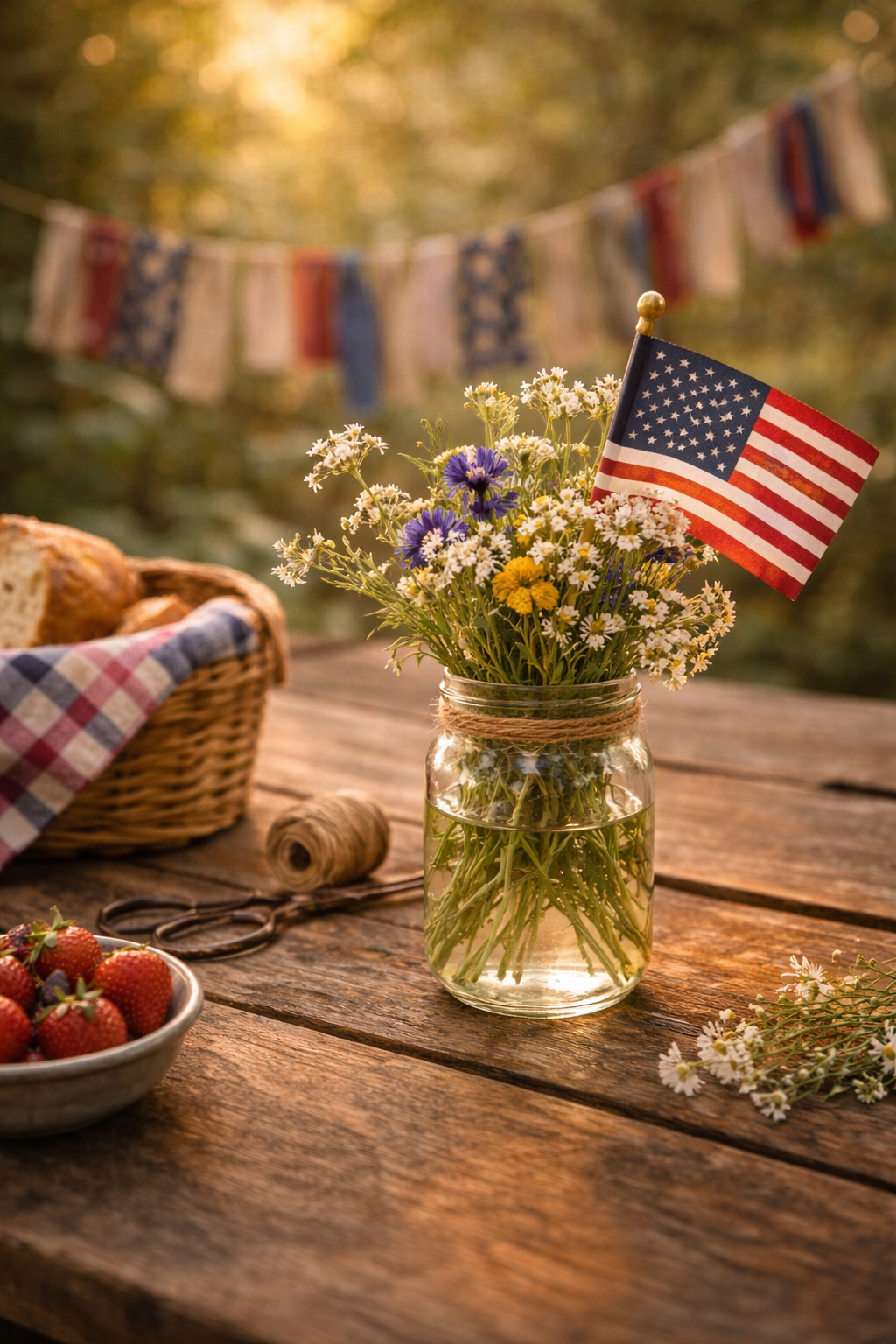
The same simplicity carries over into decorations. Colonial gatherings weren’t color-coordinated from a party aisle — they were made from what was on hand. A pewter bowl or a clear mason jar filled with greenery or flowers from the yard is often enough. A small American flag tied to the jar with twine or lace adds just a gentle nod to the holiday. Quilts draped over hay bales create warmth and comfortable seating — an idea I once saw at a wedding and never forgot. A big, comfy picnic blanket like this makes laying out food, games, and decorations feel cozy — and it’s easier to manage than bedding or towels. Sometimes I’ll add a framed historic silhouette to the centerpiece. It’s subtle, but it reminds everyone that this day is rooted in real people and real stories. The slightly mismatched, handmade look is what makes it feel authentic.
But the heart of it all — then and now — is in the games and pastimes.
Colonial children didn’t have screens or elaborate toys. They had imagination, simple tools, and everyday work that doubled as play. Rolling a ball to knock down nine pins in the grass feels like stepping back in time. Drawing silhouettes by tracing someone’s shadow creates keepsakes that are surprisingly special. Carrying water from one bucket to another — something we did back in 1976 — turns into laughter and friendly competition. Stacking small logs or sticks into neat piles teaches patience and balance without anyone realizing they’re learning anything at all. Even tying fabric scraps onto twine to make a rustic banner feels meaningful when you slow down enough to enjoy it.
These aren’t just activities.
They are ways to pause.
To work with your hands.
To look at each other instead of a screen.
To remember that freedom and family go together.
Helpful Tools & Supplies for Your 1776-Style Picnic
If you’re planning your own 1776-style picnic at home, a few simple tools and supplies make setup easier (and more fun). These are items I personally turn to that fit the spirit of the day:
• A comfortable picnic throw blanket like this one — perfect for outdoor meals and games, or if you have old quilts, they would look beautiful too!
• Wooden berry baskets for fruit and small snacks, I’m sure you have some baskets laying around the house somewhere!
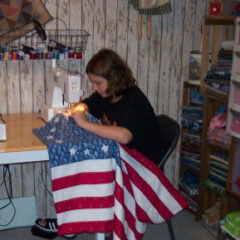
• Canvas bunting flags make a lovely cottage-core old fashion outdoor decoration. You can learn to sew them yourself here in this blogpost.
• A classic cast iron skillet for open-fire cooking
(No pressure to have everything — but these have helped me host with less stress and more joy!)
Why This Feels Even More Meaningful Now
In 1976, I was a homesick teenager longing to be back in the United States. That summer in Chester Heights gave me something I desperately needed — connection. Celebrating America’s 200th birthday by looking back made me feel rooted again.
Now, as we move toward 1776–2026, I don’t think we need bigger celebrations.
I think we need deeper ones.
We need family stories passed around a table. We need children to understand history not as a textbook chapter, but as something alive. We need gatherings that feel intentional instead of hurried.
Life felt simpler in 1976.
Maybe the world wasn’t actually simpler.
Maybe we just slowed down long enough to celebrate what truly mattered.
A Simple Way to Begin
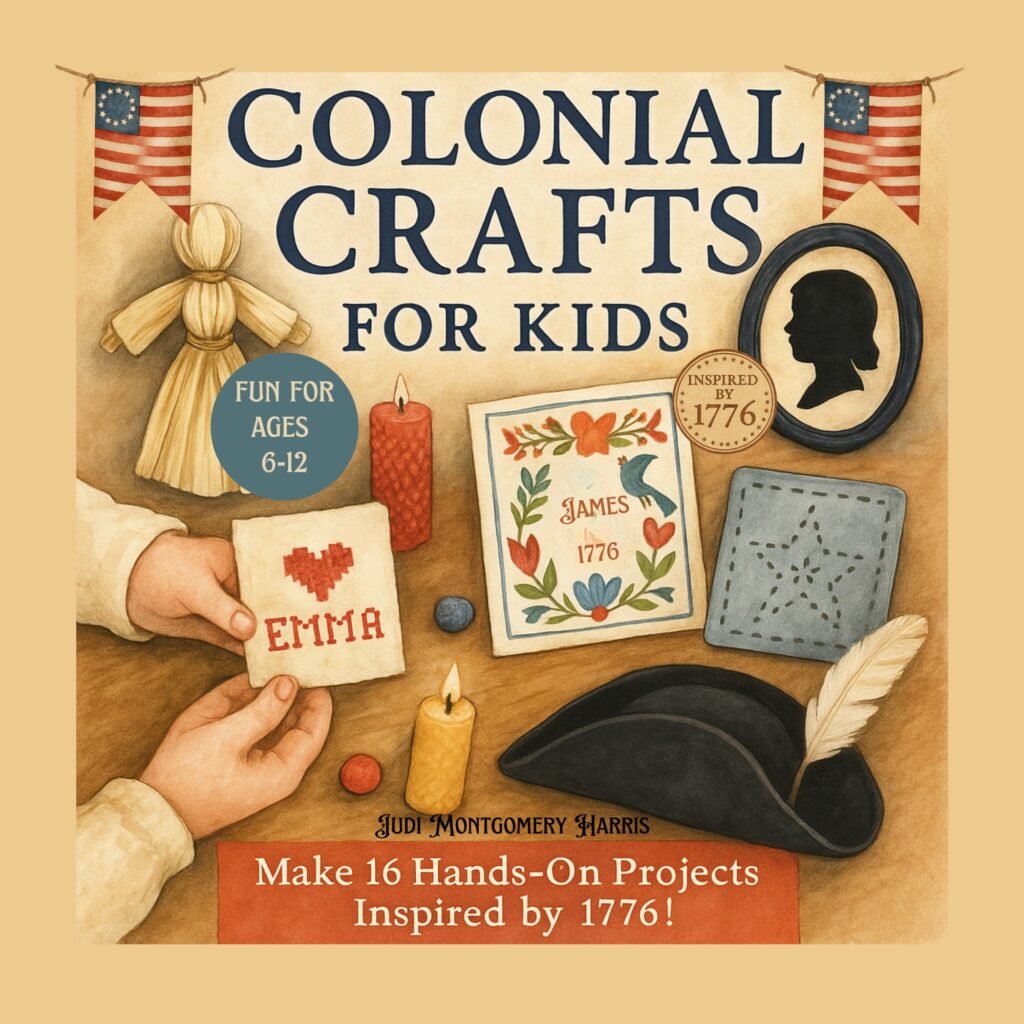
If you’d like a gentle place to start, I created a 1776-style Fourth of July Picnic printable that includes a colonial-inspired checklist along with simple games and crafts. It’s designed to be printed and reused year after year — something you can tuck away and pull out each summer as part of your family’s tradition.
You can find it here:
1776-style Fourth of July Picnic printable checklist
But whether you use the printable or simply gather a few quilts, some chicken legs, and a jar of flowers from the yard, my hope is this:
That you celebrate slower.
That you gather with heart.
And that fifty years from now, someone at your table will still remember the day.
🇺🇸