Today, it’s easy for kids to grab a snack whenever hunger strikes. Pantries are full, shelves are stocked, and eating between meals is simply part of everyday life. But what about children living in colonial America? Did they snack the way kids do today, or was food viewed very differently?
The answer offers a fascinating glimpse into daily life in early America—and it’s one that makes a simple snack like popcorn feel surprisingly meaningful.
Food Was Precious in Colonial Times
In colonial America, food didn’t come from a store. Nearly everything a family ate had to be grown, preserved, hunted, or made by hand. Because of this, food was treated with care and respect. There were no packaged snacks, no convenience foods, and no eating simply out of boredom.
Meals were planned around what was available and what could be preserved through the seasons. Hunger wasn’t uncommon, and children learned early that food was something to be valued—not wasted.
Snacking, as we know it today, simply didn’t exist.
What Did Colonial Children Eat When They Were Hungry?
When colonial children felt hungry between meals, they didn’t open a cupboard full of options. Instead, they relied on what was close at hand and easy to prepare.
Some common “snack-like” foods included:
-
Fresh berries picked from the garden or nearby fields
-
Bread, often eaten plain or with a bit of jam or honey
-
Dried fruits saved from harvest season
-
Corn in its many forms
And yes—popcorn.
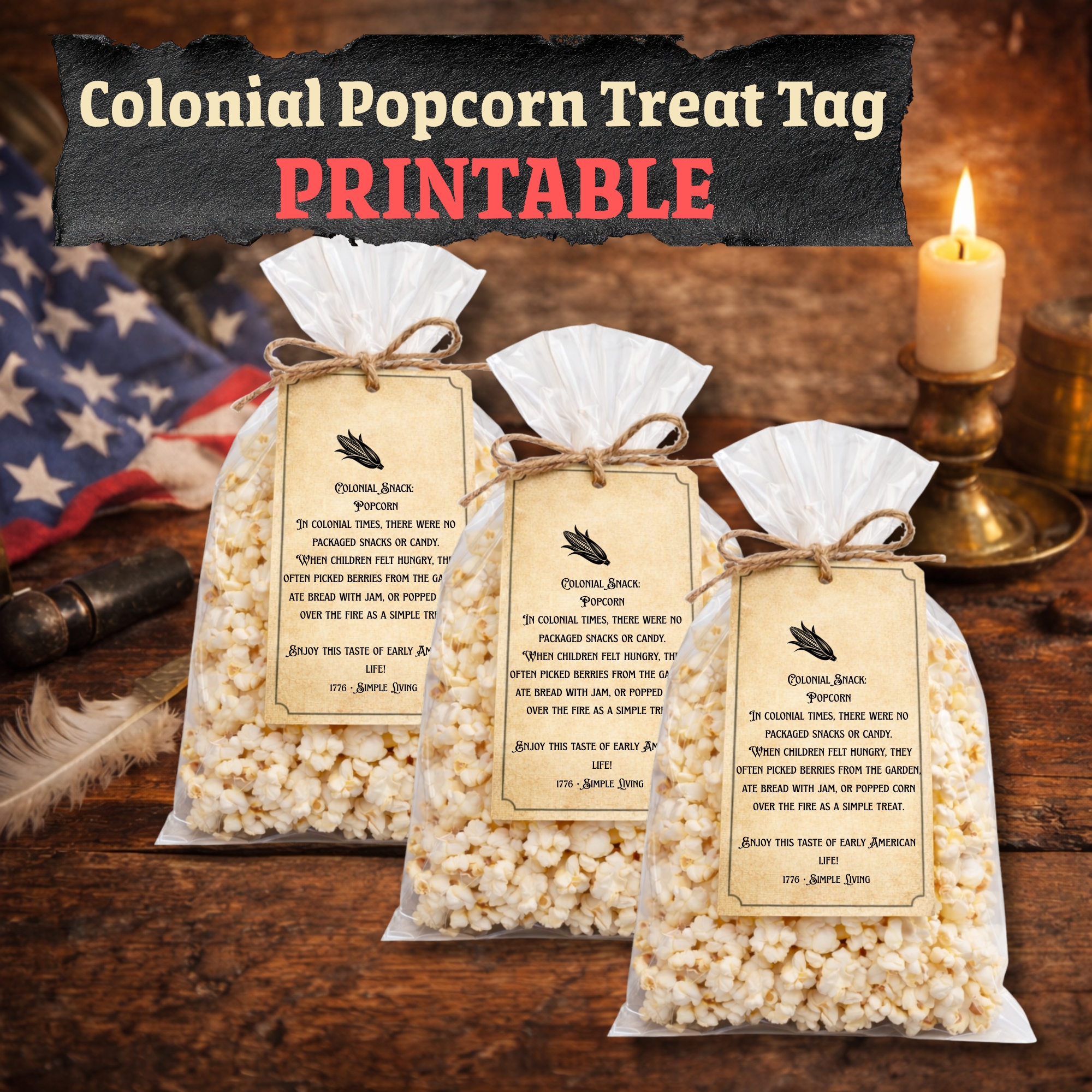
Popcorn in Early America
Corn was one of the most important crops in early America. Native American communities had been growing and using corn for generations, and colonial settlers quickly adopted it as a staple food.
Corn could be boiled, ground into meal, baked into bread, or dried for storage. One of the simplest ways to enjoy it was by popping it over the fire.
Popcorn didn’t require fancy tools or ingredients. A pot, heat, and time were all that was needed. For children, it was filling, warm, and comforting—a small treat made from something familiar and available.
In many ways, popcorn was the perfect colonial food: simple, practical, and nourishing.
Why This Makes a Great History Lesson for Kids
Food is one of the easiest ways for children to connect with history. It’s tangible. It’s familiar. And it opens the door to meaningful conversations.
When kids learn that colonial children didn’t snack the way they do today, it helps them understand:
-
how different daily life was
-
why food mattered so much
-
how people adapted to what they had
A simple bowl or bag of popcorn paired with a short explanation can turn into a memorable learning moment—one that sticks far longer than a worksheet.
This works especially well for:
-
homeschool history lessons
-
classroom activities
-
colonial days at school
-
July 4th celebrations
-
history fairs and living history events
A Simple Colonial Popcorn Activity
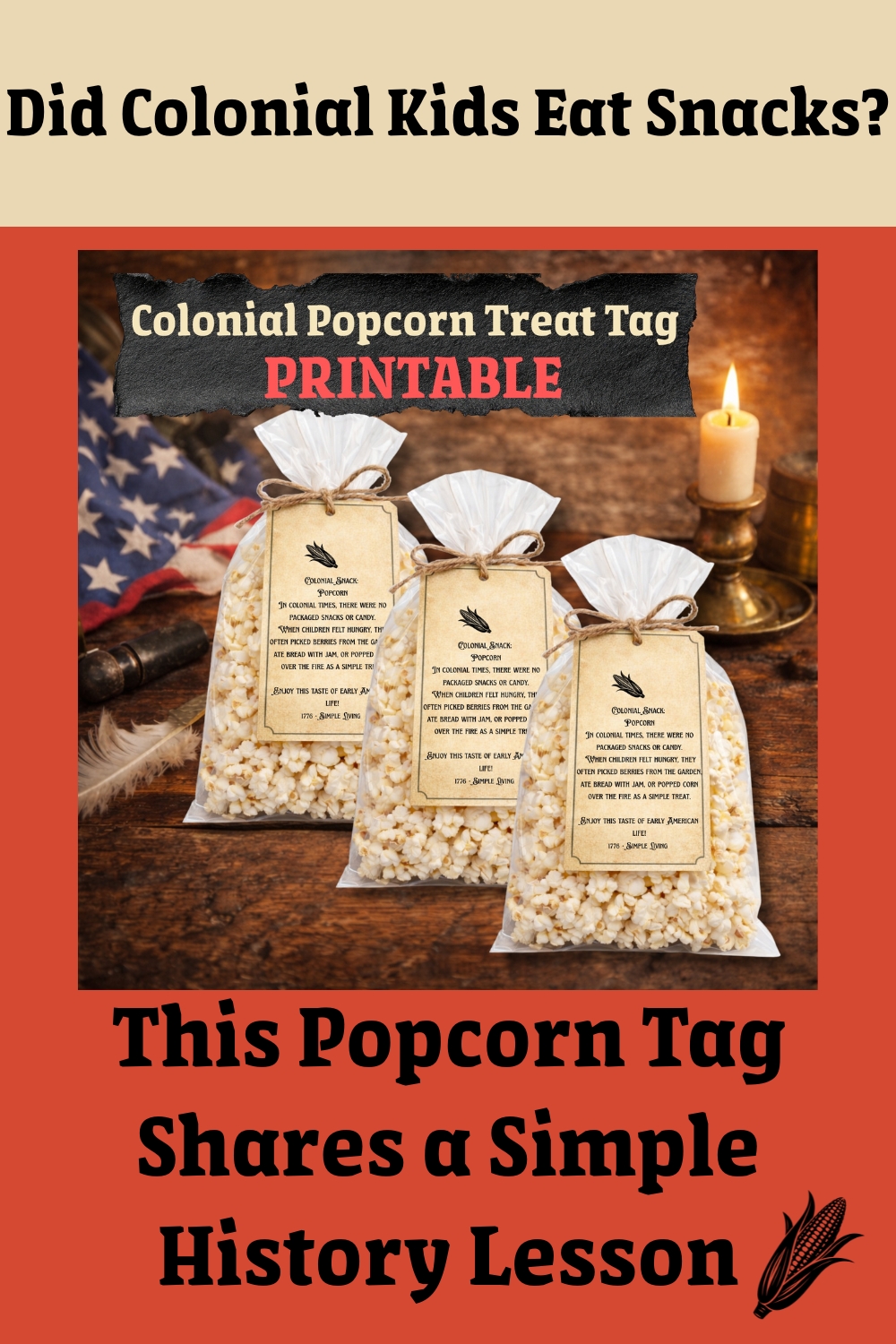
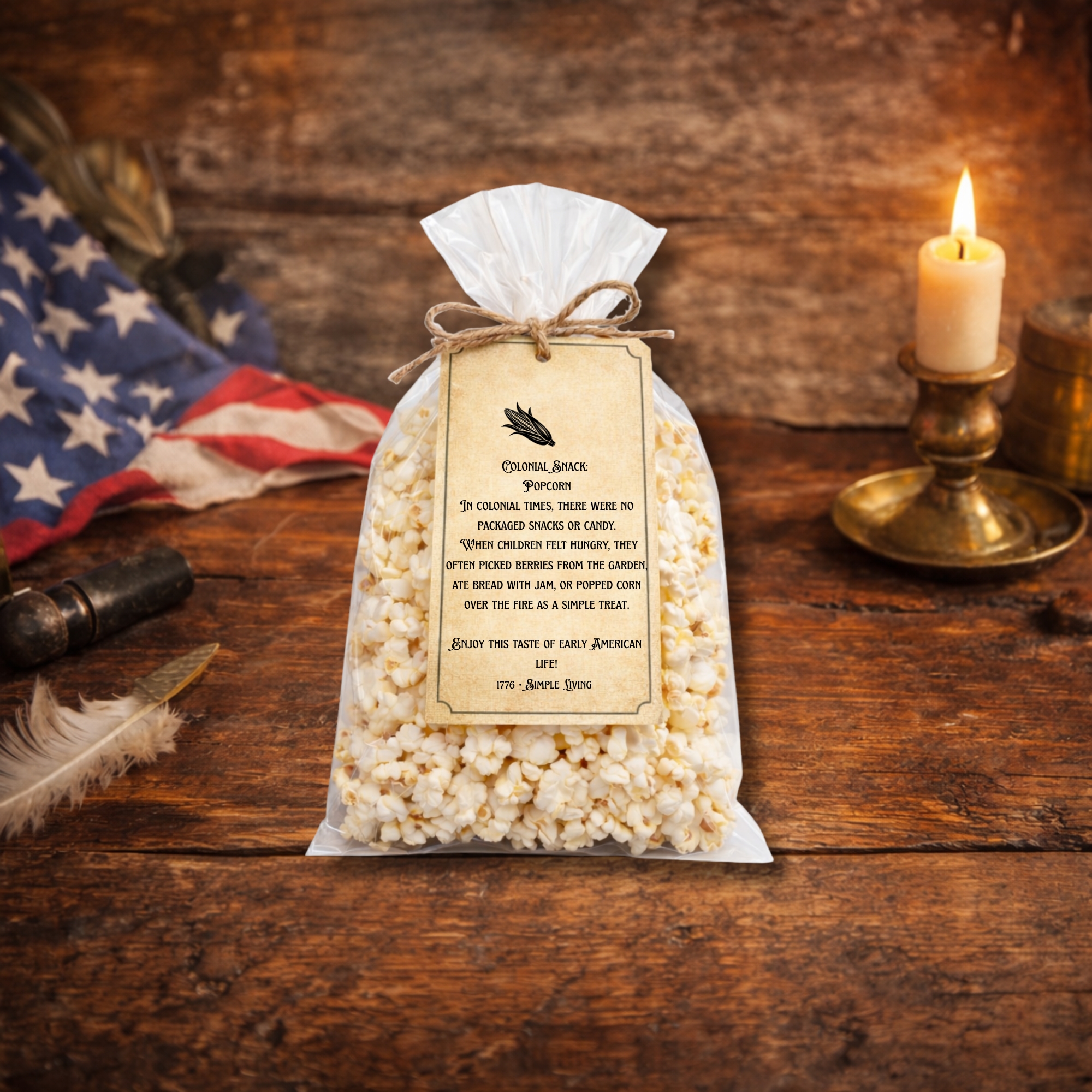
One easy way to bring this history lesson to life is by pairing popcorn with a short explanation of how colonial children ate.
Using a printable popcorn treat tag with a brief historical note allows kids to read about the past while enjoying a simple snack. It’s hands-on, approachable, and doesn’t feel like “school”—even though learning is happening.
Sometimes the simplest activities are the most effective.
Supplies You Might Need
If you’re putting together colonial-style popcorn treats, here are a few simple supplies that work well:
(These are easy items to keep on hand for classrooms, homeschool lessons, or events.)
A Final Thought on Simple Living
Colonial life was full of challenges, but it also carried a quiet simplicity. Food wasn’t abundant, but it was meaningful. Even something as small as popcorn represented effort, care, and gratitude.
By sharing these small details with children, we help history feel human—not distant or abstract.
Sometimes, all it takes is a simple snack and a story from the past to make history come alive.
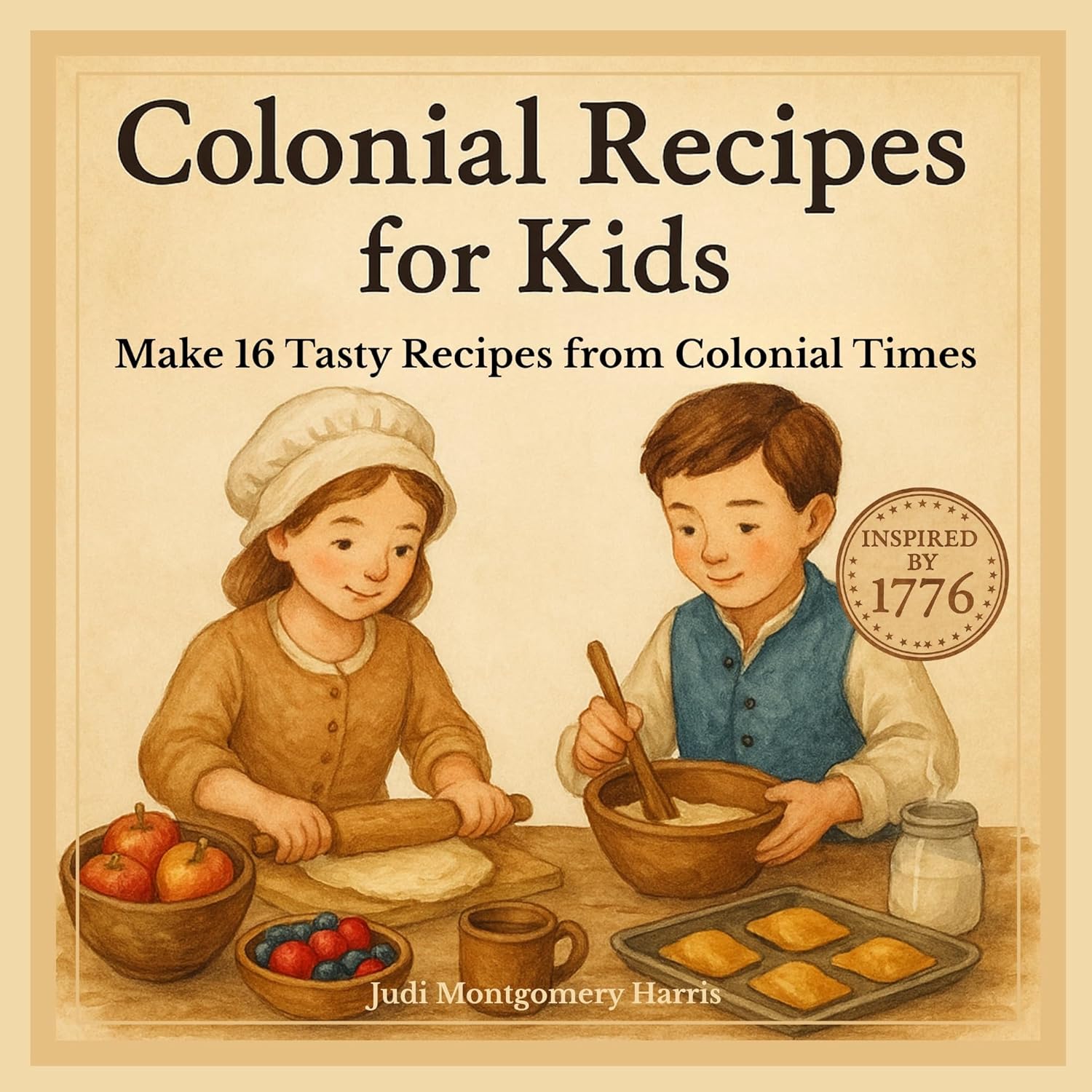
Other Fun Colonial Snacks You Can Make With Kids
Pin it for Later!